
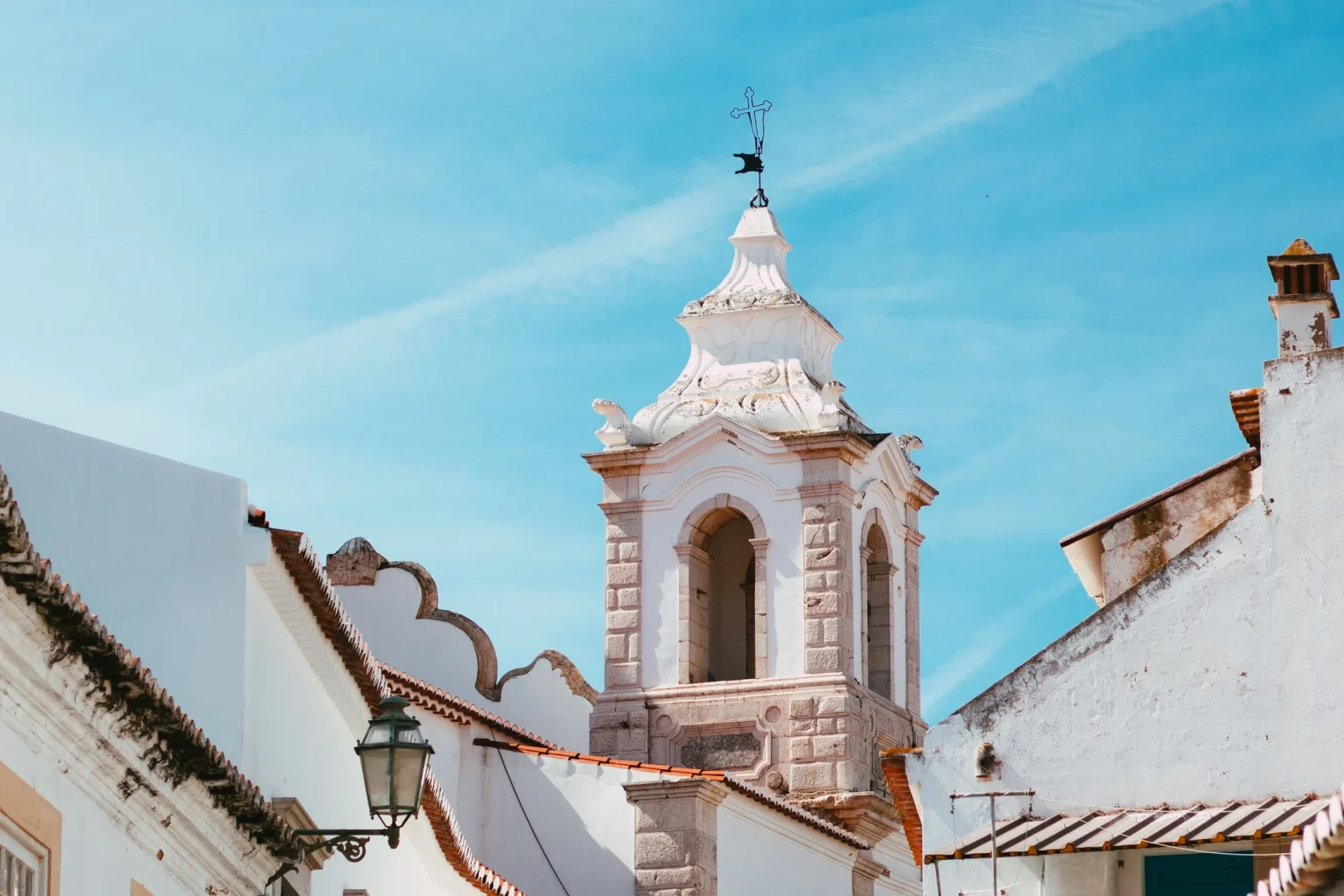
A Guide to Lagos Old Town
Lagos Old Town is the historic centre on the western side of the Ribeira de Bensafrim, behind the waterfront Avenida dos Descobrimentos. Come for walkable streets, Portuguese façades and museums, then continue towards Praia da Batata. It is a rewarding place to start a visit to Lagos, in Portugal’s western Algarve.
The appeal lies in the change of scale: open squares give way to narrow lanes, tiled doorways and small terraces. Rather than racing between monuments, allow time for a museum, a coffee and a few unplanned turns. The route below is an editorial suggestion, not a timed tour; opening arrangements should determine which interiors you visit.
A walking route through Lagos Old Town
Begin at Praça Gil Eanes
Use Praça Gil Eanes as an orientation point before exploring the surrounding pedestrian streets. Look beyond the shopfronts at window surrounds, balconies and the patterns underfoot. Rua 25 de Abril is useful for getting a sense of the centre’s restaurant life, while smaller adjoining lanes offer a different perspective on its buildings.
Choose comfortable shoes with grip. Portuguese stone paving can be uneven and slippery when wet, and a route that looks short on a map may include slopes. If you are travelling with a pushchair or have mobility requirements, inspect the actual approach to each stop rather than assuming that a pedestrian street is step-free.
Continue to Praça do Infante
Make your way towards Praça do Infante D. Henrique and the Igreja de Santa Maria. This part of the centre brings Lagos’s religious buildings, civic spaces and maritime history into close conversation. It is a good place to pause before choosing between a museum visit and a continuation towards the waterfront.
Around these streets, architectural details are often more rewarding than another photograph of the whole square. Notice a tiled panel, a shaded entrance or the contrast between white plaster and stone. Keep residential doorways clear and remember that the historic centre is a neighbourhood as well as a visitor destination.
Two museum visits that add context
Museu de Lagos and Igreja de Santo António
The Dr. José Formosinho museum nucleus includes the Igreja de Santo António. Its collections and the church interior make a useful counterpoint to an outdoor walk: you can connect the streets around you with local archaeology, religious art and the people who shaped the town.
Consult the museum’s own visitor information before setting out, particularly for last admission, closures and access arrangements. Do not build an afternoon around an assumed opening time. If your visit is short, choosing one interior and allowing time to absorb it can be more satisfying than trying to enter every monument.
Rota da Escravatura – Mercado de Escravos
The Rota da Escravatura museum addresses Lagos’s connection to enslavement and the Atlantic slave trade. Visit with the seriousness the subject deserves. Maritime exploration is only part of the town’s history; understanding its human consequences gives a fuller account than a celebratory discoveries narrative alone.
From the town walls to the water
Continue towards the walls and Forte Ponta da Bandeira near the river mouth. This transition helps explain the town’s relationship with the sea: defensive structures stand close to the historic streets, while the waterfront opens the view towards boats and the bay. Check current access before planning to enter the fort.
Nearby Praia da Batata makes a convenient coastal pause, but treat swimming as a separate decision based on the day’s conditions. A longer beach outing needs a little more planning. Our guide to beaches in Lagos compares town beaches, cliff-backed coves and longer stretches of sand.
Where to pause for food
Leave room in your walk for lunch rather than treating it as a gap between attractions. The centre offers Portuguese cooking alongside contemporary restaurants. Read the menu before sitting down and ask about dishes intended for sharing, especially if ordering seafood with a price that depends on weight.
For specific places and regional dishes, use our Lagos restaurant and local food guide. It is worth making an evening reservation separately from your daytime walk, so that a delayed museum visit or a longer coffee stop does not turn the day into a timetable.
Plan an unhurried visit
For a first visit, combine the squares, one museum and the waterfront, then return on another day for the streets you missed. Carry water, take breaks in shade and check the municipality’s A ONDA transport information if walking is not suitable for your whole journey.
If you would like the historic centre to shape your stay, browse the Lagos Lets apartment collection and assess each property’s details individually. The pleasure of Old Town is the freedom to revisit it: a square in the morning, a museum after lunch and a familiar street on the way to dinner.
Research checked on 16 October 2026. Museum access and transport arrangements can change; consult the linked official sources before visiting.